Chubb AI Exclusion Language in Robotics and Industrial Automation Policies
Robotics operators face coverage gaps as insurers exclude AI-related physical harm claims.
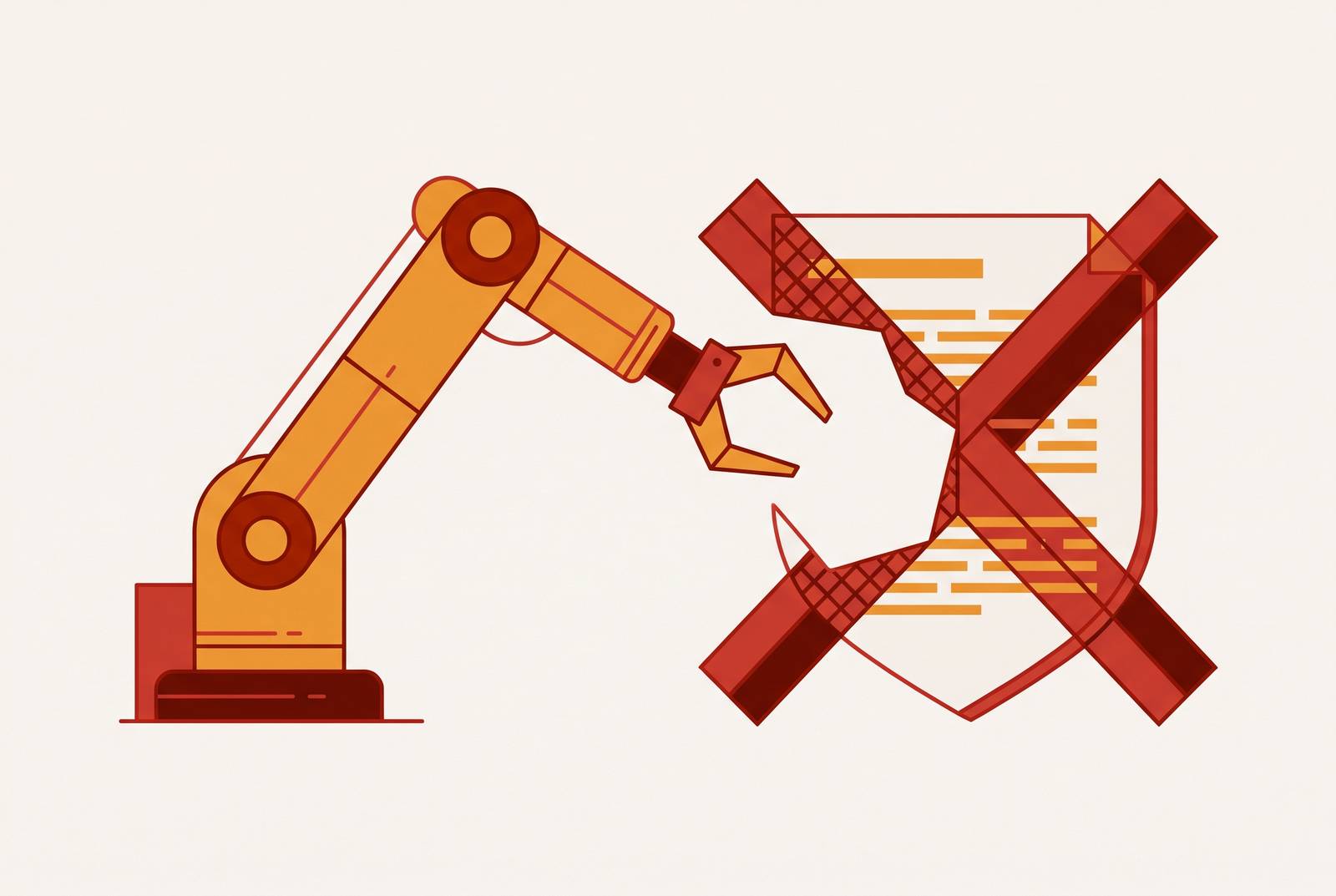
AI exclusion language approved for Chubb and peer carriers can take away coverage for the greatest risk robotics operators face: physical harm caused by machines in the field. ISO’s January 2026 endorsements spell out that risk, especially for products-and-completed-operations coverage. Operators must examine the wording of each renewal and treat coverage for autonomous systems as specialist work.
How ISO's January 2026 endorsements changed the structure of commercial general liability coverage
On January 1, 2026, ISO’s generative AI exclusion endorsements took effect, giving carriers standard forms for expressly excluding exposures previously left unaddressed. ISO (Verisk) provides the standard language used in most U.S. commercial general liability policies. Carriers can adopt its exclusion endorsements at renewal without renegotiating policy terms. Adoption remains a carrier choice, so the effective date created an exclusion framework whose effect on each policy depends on the carrier’s decision.
The three forms remove different parts of coverage. CG 40 47 excludes bodily injury, property damage, and personal and advertising injury arising from generative AI across the CGL coverage part. CG 40 48 excludes only personal and advertising injury, leaving bodily injury and property damage outside that narrower exclusion. CG 35 08 excludes bodily injury and property damage under products and completed operations.
Verisk defines generative artificial intelligence as a machine-based learning system or model trained on data with the ability to create content or responses, including text, images, audio, video or code. That definition can reach chatbots as well as control software and perception systems in industrial robots. It does not, however, make every autonomous system generative AI. The former assumption of “silent AI coverage” is no longer a reliable starting point, because an express exclusion may now replace the policy’s silence.
Why CG 35 08 is the form that hits robotics and industrial automation hardest
Products-and-completed-operations coverage responds when a product or completed job leaves the insured’s hands and causes bodily injury or property damage. That exposure closely matches a robot supplied or deployed at a customer’s facility or in the field. CG 35 08 targets this protection when the harm arises out of generative artificial intelligence. It therefore cuts into the part of a robotics company’s program intended to address physical consequences after delivery or completed work.
A warehouse robot can damage racking, and a delivery drone can drop a payload onto a vehicle. An automated press can produce defective parts that damage a customer’s downstream equipment. These examples show the physical losses at stake, but they do not establish that every such incident is excluded. The exclusion applies when the injury or damage arises out of generative AI within the endorsement’s definition. The form does not separately exclude all automated machinery or self-directing vehicles merely because they operate autonomously.
CG 40 47 reaches more broadly across CGL, while CG 35 08 makes a focused cut to products-and-completed-operations protection. That distinction matters where the largest per-occurrence limits sit in this part of the program. The insured need not have built the AI for the exclusion to apply. If the insured supplies or completes work on a product or service that uses generative AI, a physical-harm claim from that work can fall within the exclusion.
How Chubb and peer carriers are actually applying these exclusions at renewal
Chubb, Berkshire Hathaway, and Travelers have approval from regulators to add AI exclusion language to standard commercial liability policies. State regulators have approved the overwhelming majority of such applications. These are therefore more than proposed restrictions awaiting a route into commercial policies. They are approved changes that carriers can attach to accounts at renewal.
Approval nevertheless does not establish that Chubb has attached the same exclusion to every robotics account. Approval also leaves uncertain which approved form, including CG 35 08, a Chubb policy uses. The distinction between an approved filing and an attached endorsement is central to assessing an operator’s coverage. The individual policy, rather than the carrier’s name alone, determines which protection has been removed.
W. R. Berkley illustrates how far proprietary wording can extend beyond ISO’s generative AI forms. Its absolute exclusion for D&O, E&O, and fiduciary lines reaches “any actual or alleged use, deployment, or development of Artificial Intelligence,” including alleged failures of AI governance by a board. Those are different policy lines from CGL, so the wording cannot be treated as evidence of a Chubb robotics exclusion.
Where the exclusions leave actual coverage gaps for a robotics operator's full program
When products-and-completed-operations coverage is removed, no other insurer takes on the loss as a result. A robot incident can implicate general liability, cyber, property, technology E&O, products liability, and employers’ liability while still encountering exclusions across the program. Even with several policies, coverage depends on whether any one of them covers the particular cause and consequence of the incident.
A cyberattack that takes control of a robot and causes property damage exposes this problem directly. A property policy may exclude the loss because it arose from a cyberattack. A cyber policy may exclude it because the consequence is physical property damage, with no loss involving data. If an applicable AI exclusion also removes the CGL response, the incident can sit between policies without a clean backstop.
A software update that takes a robot offline and stops a production line creates a different gap. Standard CGL usually does not cover the production losses that follow, even when it would cover physical damage. Likewise, a defect in a sensor supplied by a third-party component maker may lead to a claim against the integrator. If CG 35 08’s generative AI exclusion applies to the injury or damage that follows, the integrator may lose its products-and-completed-operations protection for that claim.
Technology E&O is written specifically for technology providers. Inland marine or equipment coverage protects only the robot itself. Workers’ compensation can cover an employee’s injury, but it does not take the place of products liability or third-party property damage coverage. Umbrella and excess policies that follow the underlying CGL typically do not restore a claim that the underlying policy excludes.
Why liability lands on the deployer, not the AI vendor or robot manufacturer
The presence of a third-party AI vendor does not make the operator’s exposure someone else’s problem. Vendor contracts commonly cap the vendor’s liability, leaving the deploying organization with residual exposure. A failure may originate in a supplied component while the claim still reaches the business responsible for putting the system into service. Contractual limits on recovery from the supplier therefore matter as much as the technical source of the failure.
Gallagher Re’s March 2026 Smart Systems, Blind Spots report identifies a trend toward courts and regulators holding deploying organizations accountable for their AI systems. That direction reinforces the contractual allocation.
For robotics, the practical consequence is most visible when an integrator deploys a third-party autonomous system at a customer’s site. The customer’s claim may reach the integrator even when a supplied sensor or component triggered the failure. If CG 35 08 excludes the resulting generative-AI-related claim, the integrator faces both liability and a missing insurance response. The deploying business therefore needs to assess its insurance protection before an incident.
How the exclusions attach at renewal and what the policy language looks like in practice
The renewal mechanism makes these changes easy to miss. Carriers choose whether to adopt an ISO endorsement and attach it to an individual policy. The exclusion can arrive as a renewal endorsement in the declarations package, leaving an operator unaware of its significance until a claim arises.
The endorsement schedule is typically a separate document appended to the declarations page. It identifies endorsements by form number and edition date. The relevant January 2026 markers are CG 35 08 01 26, CG 40 47 01 26, and CG 40 48 01 26. Reading that schedule establishes which standard forms are attached, while reading the forms establishes which coverage they remove.
The absence of those numbers is not enough to establish that AI coverage remains intact. Proprietary exclusions, including forms filed by Berkshire Hathaway and Travelers, can use different identifiers and wording. Language reaching any alleged use or deployment of AI is materially different from language confined to generative AI. It must also be assessed within the policy line to which it attaches. Berkshire Hathaway, Chubb, and Travelers began filing the fall before, so accounts renewed in Q1 2026 may already have exclusions that their operators did not negotiate or notice.
What a specialist submission can recover — and what the emerging specialty market is beginning to offer
Specialist underwriters are beginning to fill parts of the gap with affirmative coverage for autonomous systems. The market is taking a path like that of cyber insurance, from silent coverage to exclusions and separate products, and then toward underwriting based on records of the controls in place. For an operator, the important change is that the submission now helps determine what coverage is available. A standard general liability application may not tell an underwriter enough about the machine-level risks to judge them.
Axis Insurance built a program for companies that make and deploy autonomous robots. Its coverage addresses bodily injury and property damage from AI navigation or perception failures, as well as physical damage caused by a cyberattack taking over a robot’s controls. It also covers production losses from a software update or sensor failure that takes a robot offline, even without physical damage. The program addresses cases where a third-party sensor or component defect causes a failure but the claim lands on the integrator.
Access to affirmative coverage increasingly depends on evidence of governance and control. Underwriting requirements include AI disclosure questionnaires, model inventories, governance protocols, AI risk registers, output verification processes, and human oversight documentation. Some submissions also require evidence of adversarial testing aligned with frameworks such as the NIST AI Risk Management Framework. Firms with documented governance may negotiate narrower exclusions or affirmative endorsements. Firms that lack those records are more likely to face absolute exclusions.
A specialist submission makes that evidence specific to the deployed system. It sets out the sensor stack, training data provenance, human-override protocols, and incident response procedures in a way an underwriter can judge. That detail signals risk quality in a way a generic form cannot and can affect the quote. A broker who understands products-and-completed-operations wording and has access to carriers writing autonomous operations coverage can route the submission to the relevant market. Specialist placement costs nothing beyond the premium because broker commissions are already included in what carriers charge.
Six due-diligence actions to take before the next CGL renewal
First, pull the endorsement schedule from the current declarations package. Look for CG 35 08 with its January 2026 edition date, CG 40 47, CG 40 48, and proprietary AI exclusions. If those standard form numbers are absent, ask the carrier in writing whether an AI exclusion is attached under another identifier.
Second, map the program against the incidents the hardware could cause. Use customer-site property damage, production loss from a robot outage, and a third-party sensor defect that creates an integrator claim. Identify the policy intended to respond to each incident and establish whether an exclusion blocks it.
Third, read the follow-form wording in the umbrella and excess policies. Check whether an underlying CGL exclusion also removes protection higher in the program. Larger limits do not close a gap when those limits follow the same exclusion.
Fourth, check what insurance the customer and government contracts require. Enterprise contracts may expressly require products-and-completed-operations coverage or limits that depend on it remaining intact. An attached CG 35 08 endorsement may create a contractual shortfall without either party recognizing it.
Fifth, gather the governance records needed to get affirmative coverage. These include the AI risk register, model inventory, human oversight protocols, incident escalation procedures, and any adversarial testing records. Their presence gives underwriters evidence on which to consider narrower exclusions or affirmative terms.
Sixth, work on the renewal with a broker who reads the policy language and has access to specialist autonomous-operations carriers. The task is to place protection for the actual machine, its controls, and its field exposures. Insurance for autonomous systems is solvable, but only when it is treated as specialist work from the first step.