Wrong Forms Wrong Exclusions Why Autonomous Vehicle Hardware Startups Get Misclassified and How to Correct It
Autonomous vehicle hardware startups need coordinated auto, product.
Autonomous vehicle hardware startups need insurance submissions that document machine architecture, deterministic safeguards, and deployment conditions, rather than classify the business as software or a fleet. That evidence must support coordinated auto, product, and cyber coverage because a single incident can engage all three. Correcting the classification, policy wording, and underwriting submission is the route to coverage that addresses the company’s actual risk.
Why AV hardware startups face a structurally different insurance problem than other tech companies
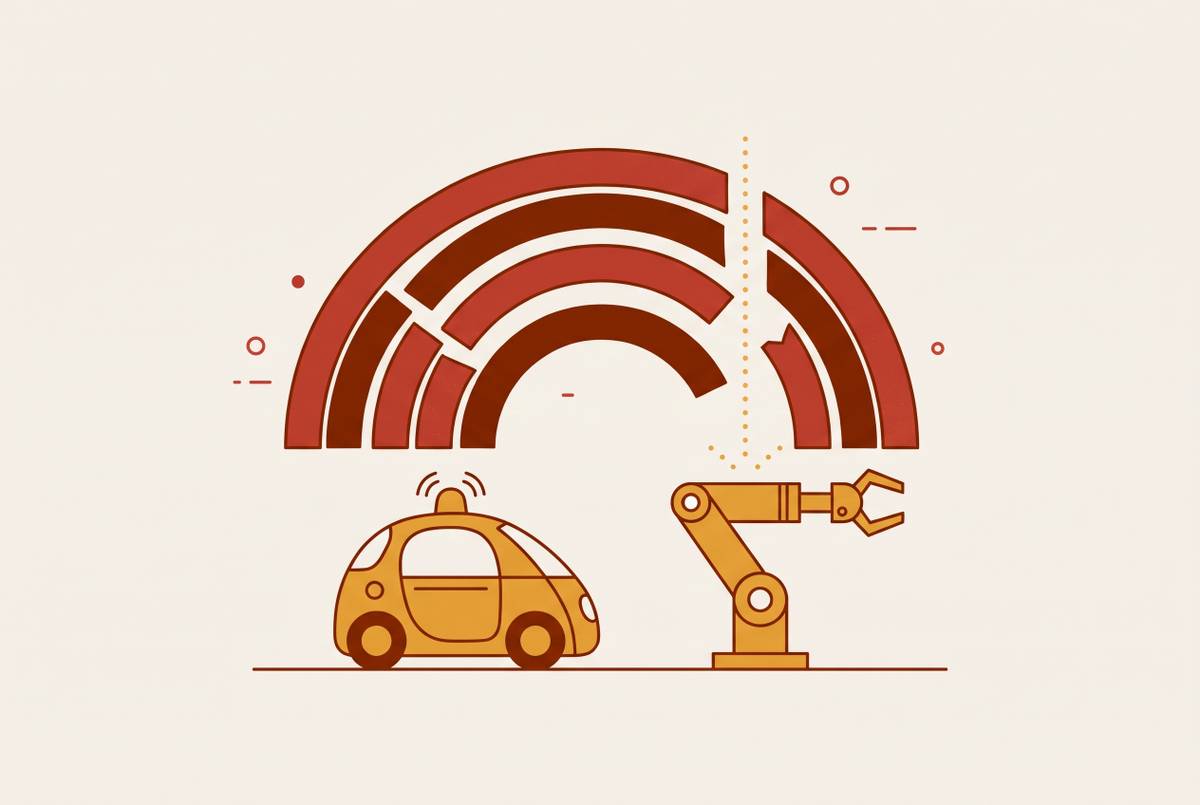
An autonomous vehicle can cause a loss in which vehicle operation, a manufactured product, and software behavior are inseparable. HUB International’s AV guide identifies that convergence as the defining characteristic of the AV risk profile. The company may simultaneously act as a vehicle operator, product manufacturer, and software licensor, yet no standard commercial form was written to hold all three roles at once. An incident can engage several of them before responsibility for the loss is established.
A broad technology classification also misses the company’s development stage. A company conducting active R&D has materially different exposures from one operating in commercial deployment, so coverage appropriate to one stage can leave gaps at another. Traditional transportation frameworks were not designed for driverless-vehicle technology. Nor does describing the business as “a software company that happens to run vehicles” resolve the problem. Once its hardware moves through the physical world and injures someone or damages property, product and auto liability can attach regardless of that description.
How a standard broker reads an AV hardware startup and why the read is almost always wrong
The company gets put in the wrong category when intake starts with a seemingly simple question about what it does. If the answer emphasizes software, the broker routes the submission toward technology forms and a tech underwriting desk that excludes physical hardware risk. If the answer emphasizes vehicle operations, the submission goes toward fleet forms and auto underwriting that excludes product and cyber liability. Neither route captures the whole business. Standard commercial classifications offer nearby categories, including software company, general contractor, and commercial fleet operator, but none adequately describes an autonomous hardware developer deploying vehicles in the field.
The underwriter evaluates the company within the selected category, while the resulting form addresses only the exposures associated with that category, leaving the combined exposure unaddressed. A carrier need not act in bad faith for a startup to pay premiums on forms that will not respond to its most probable claims. The policy language was written for a different kind of insured.
A broker without relationships across specialty lines may identify the problem yet lack the means to coordinate coverage for it. The AV guide identifies cross-line coordination as a competency developers should ask prospective brokers about. Placement requires access as well as technical understanding.
The three overlapping exposures that standard forms treat as separate but AV incidents collapse into one
Standard forms were written for vehicles with human drivers, so definitions of “operation,” “driver,” and “permissive use” do not cleanly fit a vehicle with no human at the controls. Classification remains unsettled when an accident occurs. The insurer must classify the loss under auto liability, product liability, or cybersecurity coverage, and generic auto language does not resolve that three-way ambiguity.
The second failure point concerns responsibility for the product’s decisions. As autonomy increases, liability shifts toward manufacturers and developers because the end-user has less control over decisions based on learned experience. Standard product liability forms were not drafted for that shift. Even when a policy has bodily injury coverage, it usually excludes financial losses caused by an AI failure. A general liability placement therefore cannot be treated as a complete answer merely because physical injury is among the possible outcomes.
A cyber event can overlap directly with an autonomous vehicle incident. Yet policies bought separately treat those exposures as separate risks to cover. The uncertainty is especially consequential when one event gives rise to auto, product, and cyber claims. Each form may cover part of the event without making clear how that coverage fits with the others.
AI failure modes make it harder to draw that line. Perception can misclassify what the system sees, prediction can misjudge another road user’s intent, and planning can select a maneuver from a flawed situational assessment. Different parties may be responsible for each of those failures. Intentional-act exclusions add another unresolved question because the intentionality of an action executed by AI is difficult to establish. Coverage thus requires identifying a defective component and applying several forms to an event whose causes cross their assumptions.
What the AI exclusion wave of 2025–2026 did to policies that looked adequate before
January 1, 2026, is when the ISO AI exclusion changes take effect, making it a key date for AV hardware companies to review coverage at renewal. Policies bought before 2026 may now have endorsements that exclude the risk at the heart of the company’s operations. An exclusion may have been added at renewal without a line-item disclosure, leaving the insured’s understanding of its coverage behind the actual wording.
Some carriers have moved beyond the ISO approach. At least one has introduced an “absolute” AI exclusion across D&O, E&O, and fiduciary liability, barring claims “based upon, arising out of, or attributable to” any “use, deployment, or development” of AI by any person or entity. For an autonomous hardware business, it can implicate the technology around which the company’s operations are organized.
Silence in other policies does not settle the issue. Most policies still say nothing about AI, and no court has yet interpreted these exclusions. The absence of an AI provision is not an affirmative grant of coverage for autonomous operations. Uncertainty itself leaves a gap in the company’s ability to establish what protection it has, without requiring a prediction about how a court will rule.
A large share of insurers track no AI metrics, leaving them without the loss frequency, severity, or correlation data needed to price the risk. Exclusion becomes the response to that information deficit. For a startup asserting that its policy has not changed, the practical answer is a review of the endorsements themselves. A broker who cannot assess the wording of the forms will miss a change in what is covered when the policy still looks familiar.
What a correctly structured coverage program for an AV hardware company actually looks like
The corrective approach is a coordinated program whose forms explicitly address autonomous systems. General liability provides a foundation for bodily injury and property damage caused by a machine working around people and infrastructure, and site owners and enterprise customers require proof before deployment. It is not a substitute for the other lines. At renewal after January 1, 2026, its endorsements require review for AI exclusions that could remove coverage for the core product. Auto and product coverage must also address the operating and manufacturing exposures regardless of the company’s technology label.
Standard inland marine covers mobile equipment in transit and on-site, but not robotic systems operating autonomously. Specialty carriers use manuscripted robotic equipment floaters instead. That distinction indicates why an off-the-shelf floater cannot be assumed to cover AV hardware simply because it describes mobile equipment. The coverage must fit the equipment’s autonomous operation and mobility.
Cyber and auto terms then need to address their shared incident boundary. The AV guide identifies using a single carrier across those lines as one way to prevent costly coverage disputes. Coordination remains essential whatever the carrier arrangement. Placing each line with a different carrier without aligning terms creates the conditions for a gap when one event triggers multiple claims.
Management liability also needs a close review each time it is bought. AV companies face regulatory, balance-sheet, and shareholder litigation risks whether they are privately held or working toward a public offering. Absolute AI exclusions now reach D&O at some carriers. Founders therefore need to confirm whether an AI exclusion applies and whether a carve-back preserves relevant coverage. A program can address the vehicle itself while still excluding claims against the people responsible for the business.
What contract obligations from enterprise and government customers add to the coverage requirement
Customer contracts can expose a coverage mismatch that the insurance schedule alone does not reveal. OEMs, fleet operators, and government customers impose requirements that may exceed what a misclassified policy provides. Developers licensing technology can also accept risk-transfer clauses that push significant liability back onto them. The AV guide identifies OEM contract risk as the most consistent gap among AV software developers. Accepting the obligation does not establish that an insurer has agreed to cover it.
Insurance that looks adequate on paper can be materially misaligned with the specific obligations in the contract. Limits are only part of that comparison. Required limits scale with customer size and have been rising, so limits that satisfied contracts a couple of years ago may fall short of current enterprise requirements. Even a high enough limit leaves a claim uncovered if the wording excludes the activity that caused it.
California’s CPUC rules require companies operating driverless passenger services to maintain specific insurance minimums. A nominally correct limit is not enough. A standard commercial auto form may still fail to satisfy the regulatory definition of coverage, making classification a deployment issue as well as an insurance issue.
Contractual requirements and policy terms must be reconciled before committing to the obligation. A broker with relevant expertise can identify those misalignments while the contract remains unsigned. After signature, the gap between the accepted obligation and the available coverage is the startup’s problem.
How do you build an underwriting submission that gets autonomous hardware understood and priced correctly?
A strong underwriting submission for autonomous hardware documents the machine architecture, safety systems, and operational context that specialty underwriters need to evaluate autonomy. It does not stop at a software or fleet description. Its purpose is to establish what the machine does, the conditions in which it operates, and the safeguards that constrain autonomous decisions. Development stage belongs in that account because active R&D and commercial deployment present materially different exposures.
Proof of deterministic safeguards is central to that evaluation. Underwriters need proof that the system has continuous telemetry tracking, automated intervention mechanisms, audit logs that are enough to establish the burden of proof after physical damage, and hard-coded kill switch or manual override protocols. These are architectural proofs. Without them, the result can be outright denial or prohibitive premium penalties. The submission must therefore make the safeguards legible as features of the system being insured.
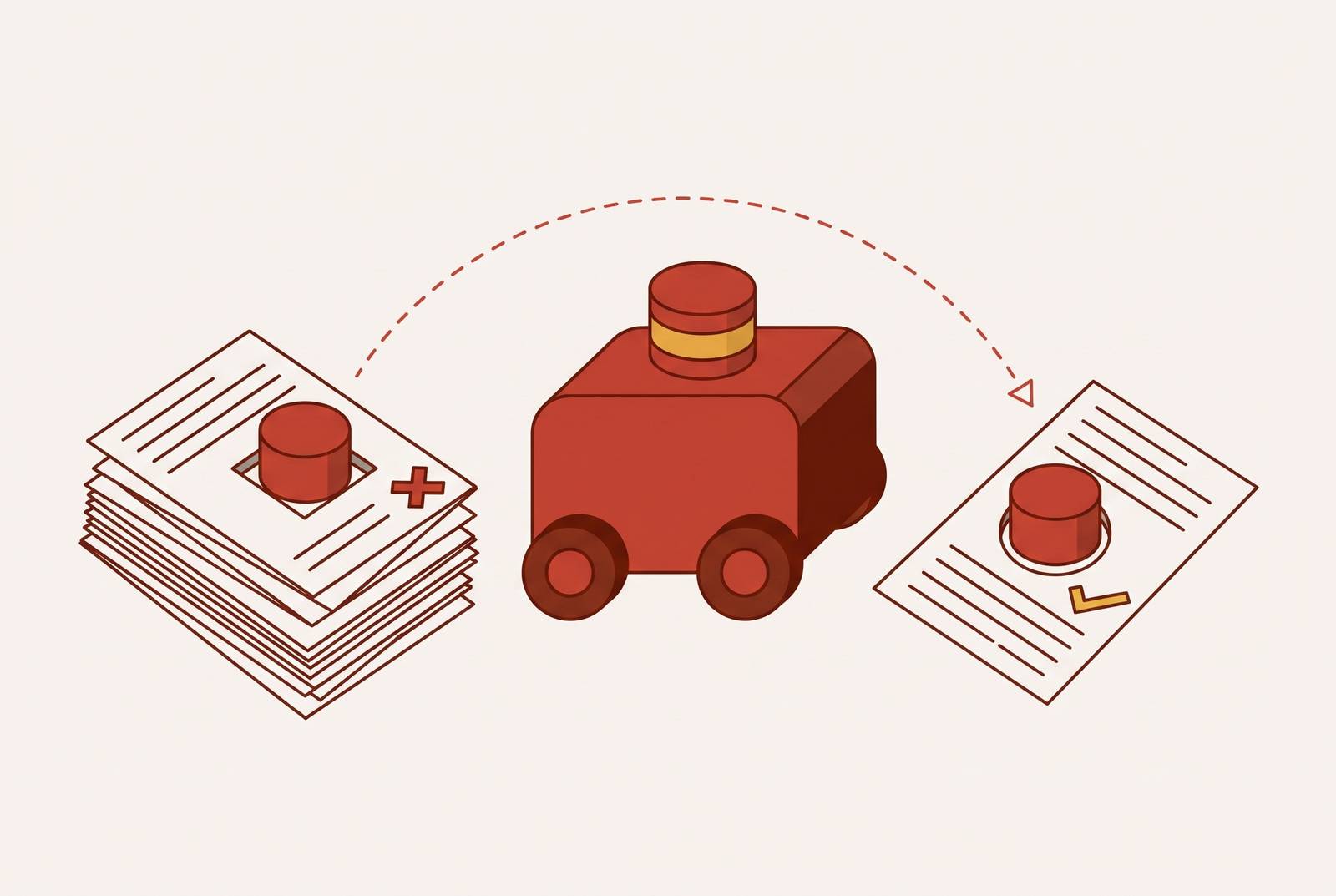
Administrative completeness affects the outcome as well. Brokers unable to provide clean, complete equipment schedules introduce friction that can produce higher pricing or declinations from the few carriers with genuine appetite for AV risk. Usable data supports the underwriting decision. Prequalifying submissions and converting equipment schedules, often received as ACORD-form PDFs, into usable rating data require specialist brokerage capabilities.
The practical standard is a submission that supports both placement and pricing. Machine architecture establishes the exposure, documented safeguards give the underwriter a basis to assess it, and complete schedules provide usable rating inputs. Each serves a different underwriting purpose. Together, they allow a specialty desk to consider the autonomous operation on its own terms, rather than exclude an unfamiliar risk hidden inside a familiar classification.